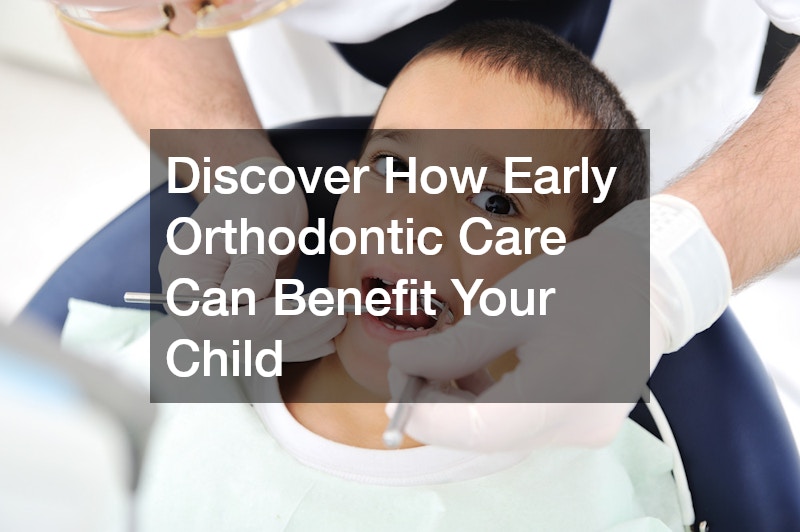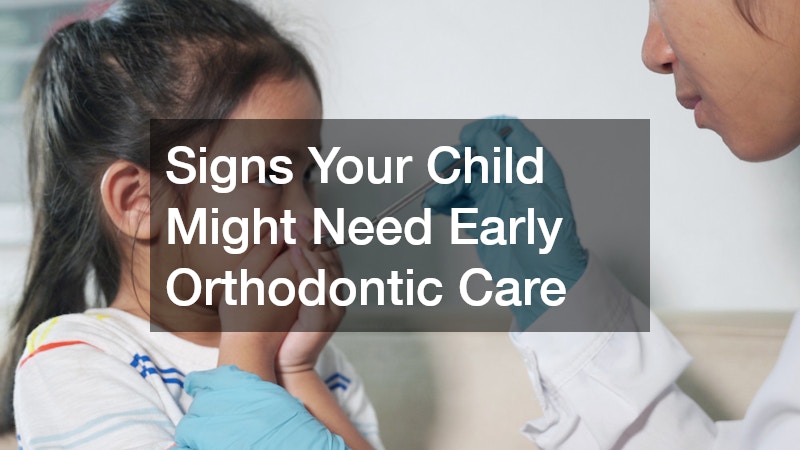
When parents think about dental alignment, they often picture teenagers with full sets of metal braces. However, dental development begins much earlier, and waiting until all permanent teeth arrive isn’t always the best strategy. The American Association of Orthodontists recommends that children have their first evaluation around age seven. At this stage, a child’s jaw is still growing, making it the ideal window to detect underlying structural issues before they fully develop.
Early intervention—often referred to as Phase 1 treatment—focuses on guiding facial growth and jaw development rather than just straightening visible teeth. By addressing potential alignment problems early, specialized treatment can prevent more severe complications, reduce the need for adult tooth extractions, and shorten treatment times later in life.
Recognizing the subtle warning signs early allows parents to seek timely professional guidance.
Visible Physical Indicators in the Mouth
The most straightforward signs often present visually when a child smiles, speaks, or eats. While minor crookedness is normal as adult teeth emerge, certain structural patterns warrant a closer look by a specialist.
Severe Crowding or Overlapping Teeth
When adult teeth begin erupting around age six or seven, they require sufficient space in the dental arch. If a child’s jaw is too small, incoming teeth may twist, overlap, or emerge behind existing baby teeth. Severe crowding makes proper brushing and flossing nearly impossible, increasing the risk of early decay and gum inflammation.
Spacing and Abnormally Large Gaps
On the opposite end of the spectrum, wide gaps between teeth can indicate mismatched tooth sizes or an underdeveloped jaw. While some spacing between baby teeth is normal and actually desirable to make room for larger adult teeth, unusually large or asymmetrical gaps can cause permanent teeth to drift off course as they emerge.
Asymmetrical or Crooked Eruption
If baby teeth fall out and permanent teeth erupt unevenly—such as on one side of the mouth months before the other—it can point to impaction or structural blockage beneath the gums. Timely orthodontic care ensures adult teeth have a clear path to emerge without damaging neighboring roots.
Bite Misalignments and Malocclusions
A healthy bite functions like a well-fitted puzzle, where the top and bottom teeth meet smoothly. Misalignments, known as malocclusions, put unnatural strain on jaw joints and surrounding muscles.
Crossbites and Jaw Shifts
A crossbite occurs when one or more upper teeth sit inside the lower teeth when the mouth is closed. This can happen at the front of the mouth or along the sides. To compensate for a crossbite, children often shift their lower jaw to one side when chewing. Over time, this shifting can lead to asymmetrical facial growth and jaw joint discomfort.
Overbites and Pronounced Underbites
When top front teeth stick out significantly past the lower teeth in an overbite, they become particularly vulnerable to physical trauma during sports or play. Conversely, when the lower jaw protrudes past the upper teeth in an underbite, it creates a misalignment that can impair chewing efficiency and affect speech development.
Open Bites
An open bite occurs when the upper and lower front teeth do not touch even when the back molars are fully closed together. This leaves a visible gap between the front arches, often making it difficult for children to bite cleanly through basic foods like apples or sandwiches.
Daily Habits and Functional Warning Signs
Beyond visible alignment issues, several behavioral habits and functional difficulties signal that a child’s jaw structure may need attention.
Early or Late Loss of Baby Teeth
Baby teeth act as natural space maintainers for permanent teeth. If a child loses baby teeth prematurely due to decay or injury, surrounding teeth can shift into the empty space, blocking the adult tooth beneath it. Conversely, if baby teeth linger far past their normal schedule, they can force permanent teeth to erupt sideways or stay trapped under the bone.
Extended Thumb Sucking or Pacifier Use
Sucking is a natural comfort mechanism for infants, but if the habit persists past age four or five, the constant pressure alters bone structure. Thumb sucking presses the upper jaw outward while pushing the lower teeth inward, frequently leading to narrow arches, open bites, and speech impediments.
Chronic Mouth Breathing and Facial Changes
If a child routinely breathes through their mouth rather than their nose—especially during sleep—it can alter normal facial development. Persistent mouth breathing causes the tongue to rest low in the mouth rather than against the roof of the palate. Without the tongue pressing outward to expand the upper arch, the palate stays narrow, often leading to restricted airways and severe crowding.
Long-Term Benefits of Early Evaluation
Seeking orthodontic care early doesn’t always mean a child needs immediate braces. In many cases, an initial evaluation simply establishes a monitoring baseline. When early intervention is recommended, it leverages the child’s natural growth spurts to reshape bone structure gently. Addressing narrow palates, misaligned bites, and harmful habits during childhood sets the foundation for a healthier smile, easier hygiene, and simpler treatment during adolescence.